

Wine for pleasure — with an eye on value
For those who enjoy wine, there’s a particular pleasure in opening a bottle years after it was bought and discovering that it’s matured beautifully — and may even have risen in value along the way.
Whether you’re buying wine to drink now or lay down for the future, the current market offers many interesting options. Not only is there unprecedented choice and quality, but some of the world’s most sought‑after wines are now available at lower prices than in recent years.
This is not an article about wine investment in the conventional sense. We’re not suggesting that fine wine should form part of an investment portfolio, nor that anyone should buy bottles purely for speculative gain. However, buying wine with curiosity and patience can be hugely rewarding in other ways.
How prices of some fine wines have fallen
While average wine prices continue to rise, wine market indices such the Liv-ex Fine Wine 1000 show that prices across parts of the fine wine market reached a peak in 2022 and have since fallen. While the market has shown signs of stabilising, some vintages have been trading 20-30% below previous highs.
However, these prestigious wines are only a tiny part of the wider market. As Gareth Groves, Managing Director of Hampshire wine merchant Stone, Vine & Sun, explains, the so‑called ‘investment wine’ market represents perhaps 0.5% of global production. More importantly, he suggests that the most satisfying wines to buy are often those with genuine drinking demand rather than those driven mainly by trading activity.
‘Never buy anything you wouldn’t be prepared to drink,’ he says. ‘If values change over time, that’s a bonus, but it shouldn’t be the objective.’
Why the market looks different today
One major change has been in Bordeaux. Twenty years ago, buying wine ‘en primeur’ — purchasing before bottling — was often promoted as an opportunity to pre-empt an increase in prices at a later stage. Over time, however, pricing of new releases has increased, meaning this is no longer a given.
For buyers today, this can work in their favour.
Rather than paying premium prices for wines that may take many years to reach maturity, it’s often possible to buy older vintages that are ready to drink now at similar — or sometimes lower — prices.
This is particularly relevant in Bordeaux, where supply remains relatively abundant. While Burgundy’s fragmented vineyards create natural scarcity, Bordeaux produces wine on a far larger scale. This means good mature wines can still represent attractive relative value for buyers.
Regions worth exploring
Champagne
Vintage Champagne remains one of the more established areas of the market. Leading houses such as Krug, Dom Pérignon and Louis Roederer Cristal have seen prices soften from previous highs, while global demand remains steady.
Champagne combines ageing potential with broad drinking appeal. However, as with all wine, future values are uncertain and shouldn’t be relied upon. For those looking for good‑value sparkling wine, Crémants can often compare well to Champagne at significantly lower prices.
Italy
Italy is another area attracting more attention. According to Groves, top Italian wines still appear ‘undervalued for the quality’.
Wines from Tuscany and Piedmont — including Brunello, Barolo and leading Chianti producers — often occupy a middle ground: widely purchased for drinking, but occasionally trading in secondary markets.
While some wines may hold their value, this is not guaranteed and should not be assumed when making purchases. Compared with top Burgundy, many Italian wines continue to appear attractively priced for those focused on enjoyment.
South Africa
Perhaps the most interesting part of the interview concerns South Africa.
Groves believes that, pound for pound, some South African wines represent among the best value available today. In particular, he highlights the significant improvements in South African Chenin Blanc over the past decade.
Rather than the heavier styles once associated with New World wines, producers are increasingly focusing on fresher, more balanced wines from cooler regions. Areas such as the Swartland and Cape Agulhas are producing wines of exceptional quality, often at prices far below comparable European bottles.
Importantly, many of these wines may be aged for several years, allowing drinkers to experience how they evolve over time.
‘The quality of wine-making there is exceptional right now,’ says Groves. ‘It’s a close-knit wine community, and producers are constantly learning from each other and pushing standards higher. Pinot Noir is better than ever, and South Africa still produces excellent Cabernet-Merlot Bordeaux blends.’
For those looking to build a modest cellar without spending hundreds of pounds a bottle, South Africa may be one of the most exciting regions to explore today.
Beyond the traditional regions
Groves also points to growing interest in countries such as Greece, Croatia and parts of Eastern Europe.
These are unlikely to be associated with conventional ‘investment wine’, but they offer something arguably more rewarding: discovery. One of the pleasures of wine is that there is always something new to explore, and quality has improved significantly across many lesser‑known regions.
England is another area to watch.
‘English sparkling wine is very good, though expensive,’ says Groves. ‘But I’m particularly interested in the development of English still wines. Last year, so we had a great summer, so it’ll be interesting to see if we start seeing some really good English whites, roses, and even reds.’
How much should you spend?
Groves considers £15 to £25 to be a sweet spot for finding interesting wines at an accessible price point. Moving into a higher price range means a dramatic increase in the quality of the wine. It’s worth remembering that if you buy a £5 bottle of wine in the supermarket, you’re paying just 20p to 40p for the wine itself, the rest covers tax, alcohol duty, packaging and other costs. With a £15 bottle the cost of the wine is £4 to £5.
Fine wines that feature in secondary markets may begin at £50, but anyone considering wine primarily as an investment should seek specialist advice.
Storage and provenance still matter
For anyone hoping that bottles may hold or even increase in value over time, storage remains critical. This is equally true for those keeping wine to drink later.
Professionally stored wine — particularly wine kept ‘under bond’ in temperature‑controlled warehouses — will usually command stronger resale values because provenance can be clearly demonstrated.
However, wine differs from conventional investments in important ways. It involves storage costs, insurance considerations, limited liquidity, valuation uncertainty and changing market sentiment. Realising any value may depend on market conditions, and there is no guarantee that a buyer will be available when you wish to sell.
For most people, the most important principle remains simple: buy wines you genuinely want to drink. A bottle sitting in a cellar should still provide enjoyment even if its value never rises.
Indeed, Groves argues that one of the biggest mistakes collectors make is waiting too long to open special bottles.
‘Wine is there to be drunk and enjoyed,’ he says. ‘It’s a shame when something created for pleasure never fulfils its purpose.’
A healthier market for enthusiasts
The heated market of 2021 and 2022 encouraged speculative buying and inflated prices in some cases. Today feels rather different.
Prices in some parts of the market are more moderate, supply has improved, and mature wines are increasingly available. At the same time, the global quality of wine — from England to South Africa to Italy — may be higher than ever.
For wine lovers, this creates an appealing environment: the chance to buy and enjoy excellent bottles today, while building a cellar that, in some cases, may increase in value over time.
As AJB Wealth’s Managing Director (and wine enthusiast), Paul Willans, comments:
‘I would shy away from buying wine for investment reasons. In my view, anything that does not generate an income is difficult to value with confidence. For me, fine wine is a gift to my future self.’
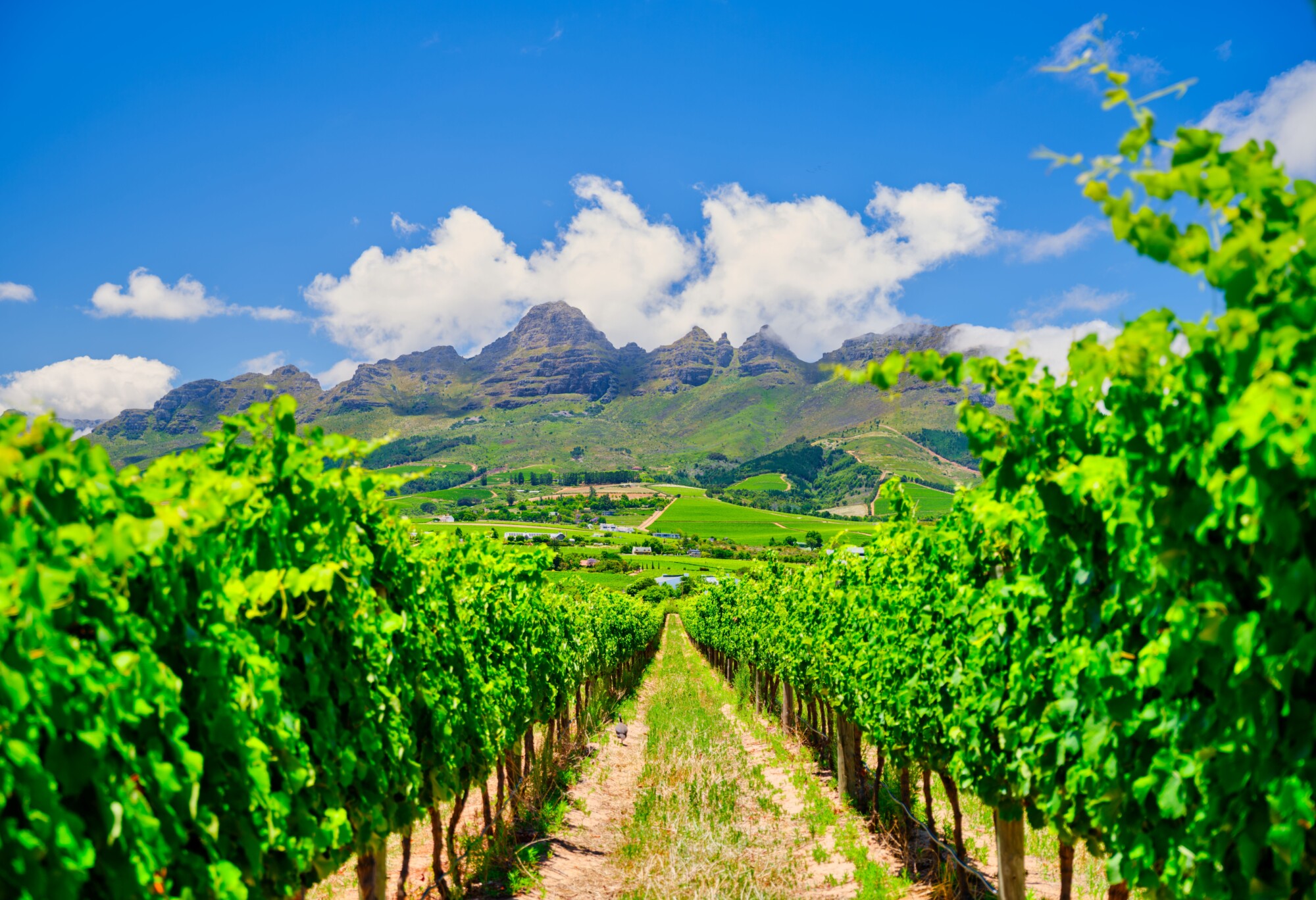
Caption: the image above shows rows of vines in Somerset West in South Africa’s Western Cape
AJB Wealth can assist with all aspects of investment and financial planning. To discuss your situation, please book an exploratory meeting, or call us on 01428 774 070.
Important: This article is intended for general interest purposes only and focuses on the enjoyment and appreciation of wine. It should not be regarded as financial or investment advice. The value of wine can go down as well as up, and any references to potential increases in value are incidental to the enjoyment of collecting and drinking wine. Anyone considering wine primarily as an investment should seek specialist advice and understand the risks involved. In particular, wine is an illiquid asset, and it may not be possible to sell holdings when desired or at an expected price.


